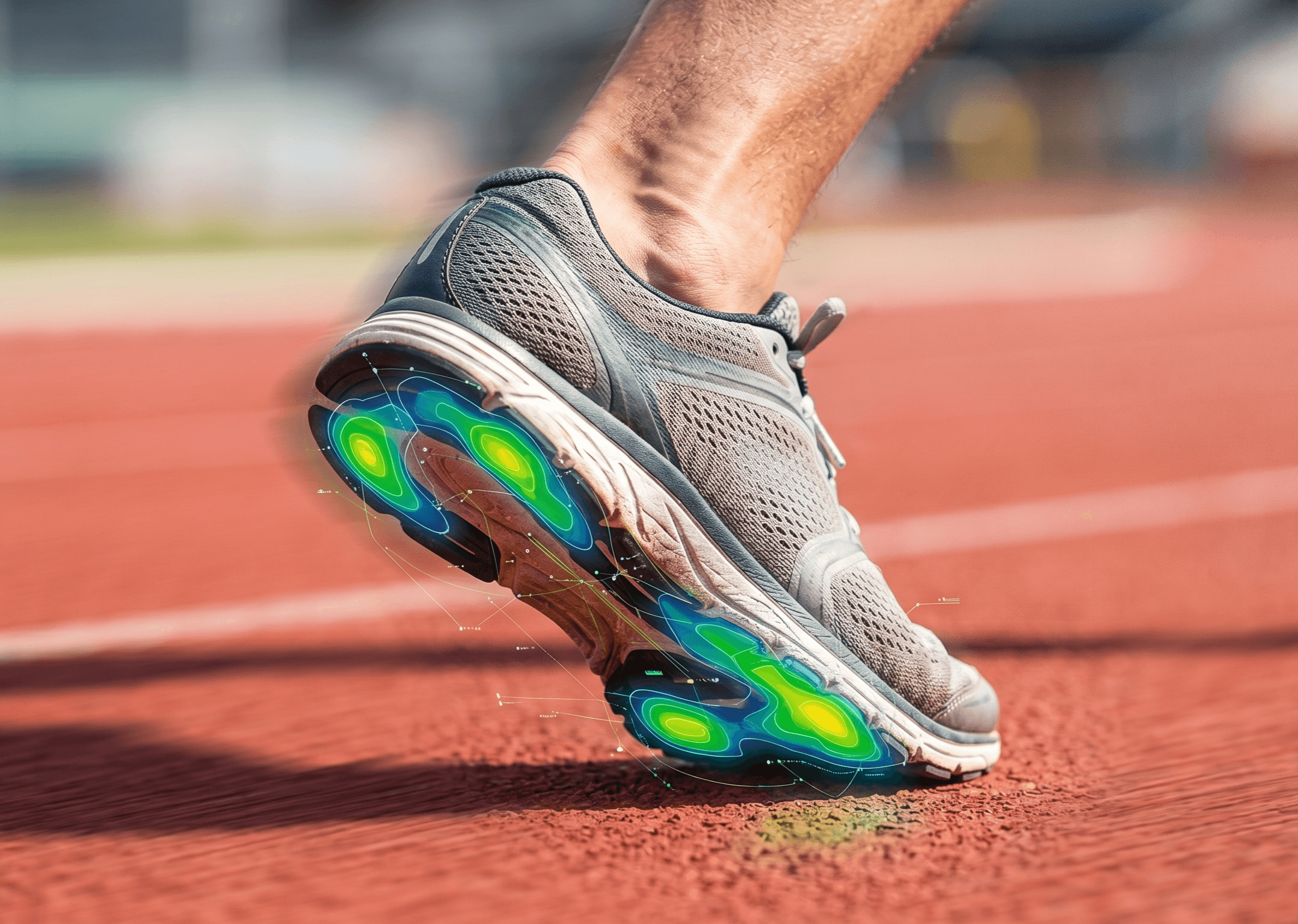
Athletes often think that more cushioning means better protection. Whether you use running shoes, gel inserts, or soft insoles, we usually link comfort with preventing injuries and healing. Cushioning can make your steps feel softer, but it does not always fix how weight moves through your foot when you run or walk.
If you deal with foot pain, shin splints, sore knees, or heavy legs after training, the problem might not be your shoes. The real issue may be how pressure is spread across your feet.
Understanding Load Distribution
Every step sends shockwaves through your feet, ankles, knees, and hips. When you run or jump, this force can be several times your body weight. Fast runners hit the ground even harder, moving at speeds of 2.5–6 m/s.
Ideally, your weight should spread evenly across your whole foot. But when one spot takes too much stress over and over, your muscles and joints get overworked. Studies show that when foot pressure crosses a certain level (200 kPa), the risk of injury goes up. Over time, uneven pressure may help cause:
- Heel pain and uneven impact on your joints
- Arch pain (plantar fasciitis) caused by feet rolling inward too much
- Pain in the ball of your foot from too much front-end pressure
- Ankle instability from feet rolling outward
- Knee pain caused by your feet pointing too far in or out
- Tired muscles and weaker push-offs when you jump or run
Why Cushioning Alone Isn't Enough
Soft foam and gel inserts are made to absorb shock. This gives you quick comfort. But they rarely fix the root cause of why your foot hits the ground too hard in the first place.
Imagine driving a car with badly aligned wheels. Adding softer tires might make the ride feel smoother for a while, but the uneven wear and steering problems will still be there.
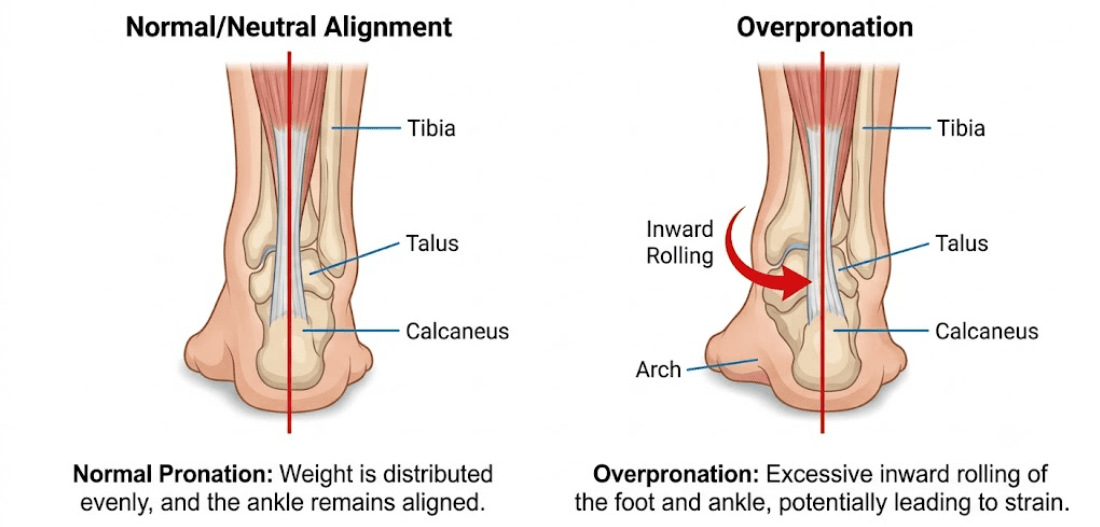
Just like that car, padding your shoes without fixing your foot posture only hides the problem. Bad walking habits will continue to cause damage. For many athletes, lasting recovery requires both a soft landing and smart pressure control.
The Need for Continuous Pressure Mapping
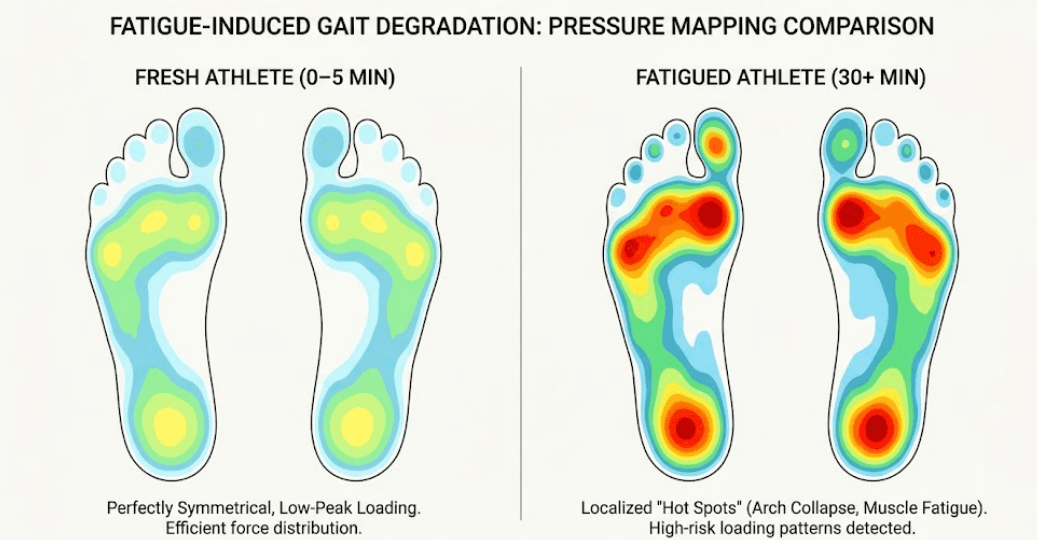
In the past, athletes relied on short 10-minute clinic visits to check their walking style. But the way your body moves breaks down after 20–30 minof continuous exercise. A quick lab test only captures you at your best. It completely misses what happens when you are tired—which is when injuries usually happen.
Modern smart insoles can track your pressure constantly. They help identify exactly what goes wrong when you get tired, including:
Recovery Isn't Just About Rest
When healing an injury, many athletes only focus on stretching, strength training, and resting. These are very important. But recovery is also deeply affected by what happens every time your foot hits the ground.
If too much pressure keeps pounding the same spot on your foot, the pain may stay no matter how much you rest. Fixing the way your body moves while doing physical therapy often gives you the best chance to fully recover.
At Spandhika Orthotics, we built the Intelligent Orthotic & Leg Monitoring System (IOLMS) to bring high-tech foot tracking out of the lab and into your daily life.
Traditional foot trackers can cost millions of rupees and are stuck in research labs. IOLMS is India's first affordable, water-resistant smart insole made for everyday use. It uses 32 tiny sensors and motion trackers to map exactly how you walk. It tracks 7 key movement stats in real time. This helps reduce injury risks and supports a faster, safer recovery.
A Smarter Approach to Performance and Recovery
Athletic recovery is about more than just softening the blow. It is about helping your body manage weight and pressure safely with every single step.
Cushioning makes your shoes comfortable. But smart pressure control focuses on the mechanics behind your movement. By understanding exactly where pressure builds up, you can fix bad habits early. This helps support your recovery, improves your daily comfort, and lets you move with confidence.