When a diabetic foot sore appears, it often feels like a sudden emergency. One day your foot looks fine, and the next, there is a serious wound. But the facts tell a very different story.
In India alone, there are over 50,000 leg or foot amputations every year, and 80% of them start with a sore caused by too much foot pressure. These wounds are the final result of weeks or months of silent, repeated stress on the foot.
The Myth of the "Sudden" Ulcer
Foot sores are caused by pressure building up day after day, not by a single injury. For people with diabetic nerve damage (neuropathy), the ability to feel this pressure is greatly reduced or completely gone.
Doctors know that the danger zone starts when foot pressure crosses a certain level (200 kPa). When one spot on your foot repeatedly takes this much weight, the skin and tissue begin to break down. This damage speeds up due to:
- High pressure in the middle of the foot, which can double for people who have had sores before
- Unnoticed changes in how you walk to make up for foot numbness
- Tiny daily injuries that go unnoticed because the foot cannot feel pain
- Slower walking and stiff ankles that force your weight onto the wrong parts of your foot
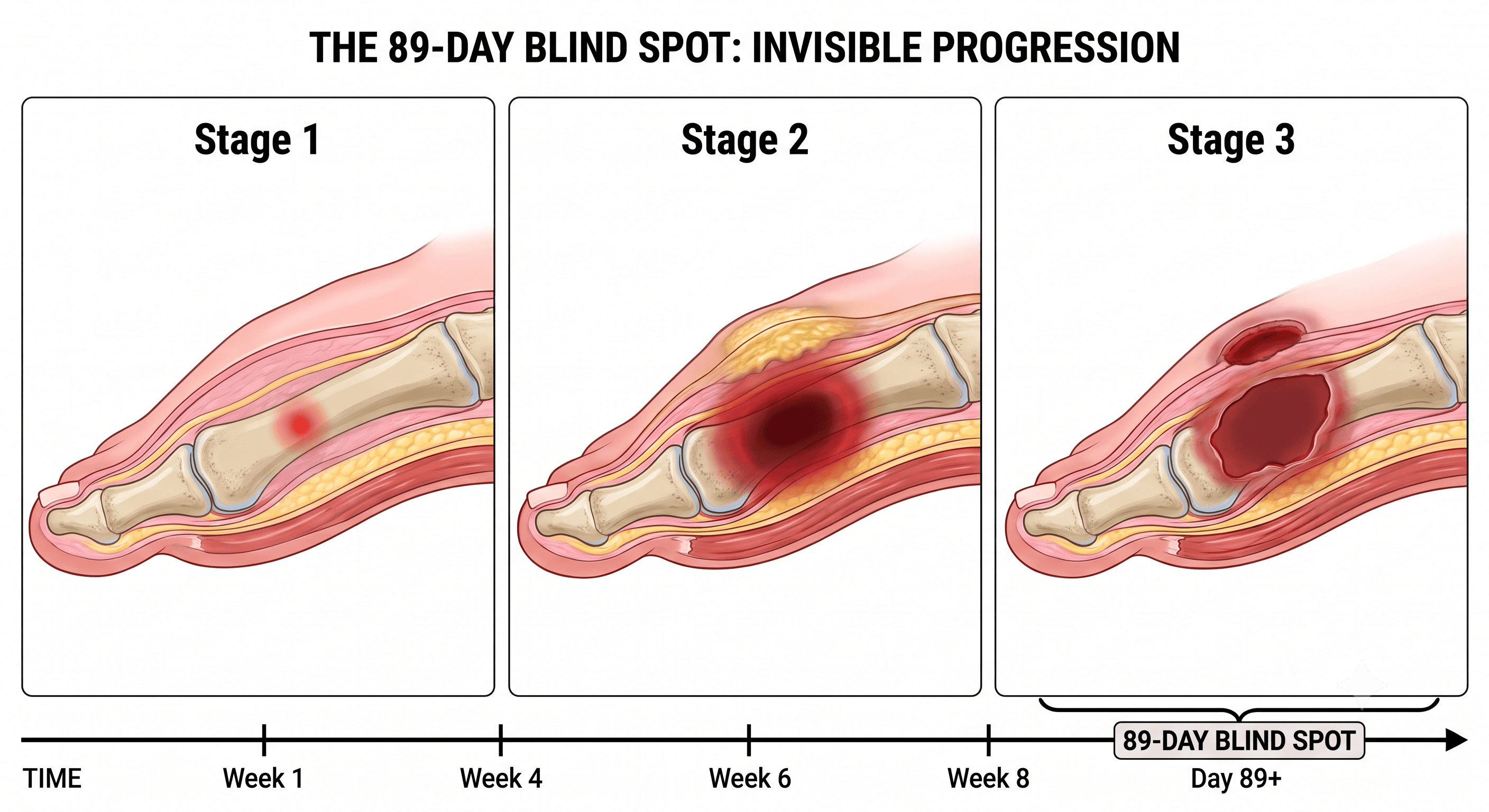
The 89-Day Blind Spot
Right now, most patients only see their foot doctor every 3 to 6 months. This creates a dangerous gap between visits where high-pressure spots go completely unnoticed.
dangerously high, unseenDay 89
Your foot may look normal at both doctor visits. The real danger happens in the dashed middle section—completely invisible to you and your doctor.
A quick 10-minute walk at the doctor's office only shows how you walk at your best. It does not show how your feet act when you are tired at the end of the day.
The way you walk breaks down after just 20 to 30 minutes of being on your feet. If we only check your feet in a clean clinic a few times a year, we miss the thousands of steps you take at home where the real damage happens.
The Power of Continuous Foot Monitoring
The best way to fix this blind spot is to track your feet every day. By monitoring foot pressure in the real world, we can help stop sores before they start. The evidence is clear:
Shifting to Proactive Care
We cannot afford to wait for sores to appear before doing something. Global health guidelines now highly recommend continuous foot tracking for high-risk diabetic patients.
By bringing smart, doctor-level tracking into your home, we can catch invisible warning signs weeks before they turn into a crisis. This helps protect your feet, keeps you moving, and supports a healthier life.
At Spandhika Orthotics, we built the Intelligent Orthotic & Leg Monitoring System (IOLMS) to bring high-tech foot tracking out of the lab and into your daily life.
Traditional foot trackers can cost millions of rupees and are stuck in research labs. IOLMS is India's first affordable, water-resistant smart insole made for everyday use. It uses 32 tiny sensors and motion trackers to map exactly how you walk. It tracks 7 key movement stats in real time to help support safer diabetic foot care and reduce injury risks.