
India's older population is growing fast, with over 153 million people aged 60 and above today, and expected to reach 317 million by 2050. With this growth comes a major health challenge: injuries from falls cost an estimated ₹6,500 crore every year.
Globally, falls are the second leading cause of accidental death. But one important fact is often ignored: 80% of falls happen after a measurable decline in walking ability. These tiny changes in how a person walks are impossible to see with the naked eye without daily tracking.
The Metrics That Matter
When an older adult's mobility starts to decline, their body naturally tries to adjust. These adjustments show up as changes in how they move. Studies show that uneven stepping—meaning how inconsistent each step is—can help predict falls up to 12 months in advance.
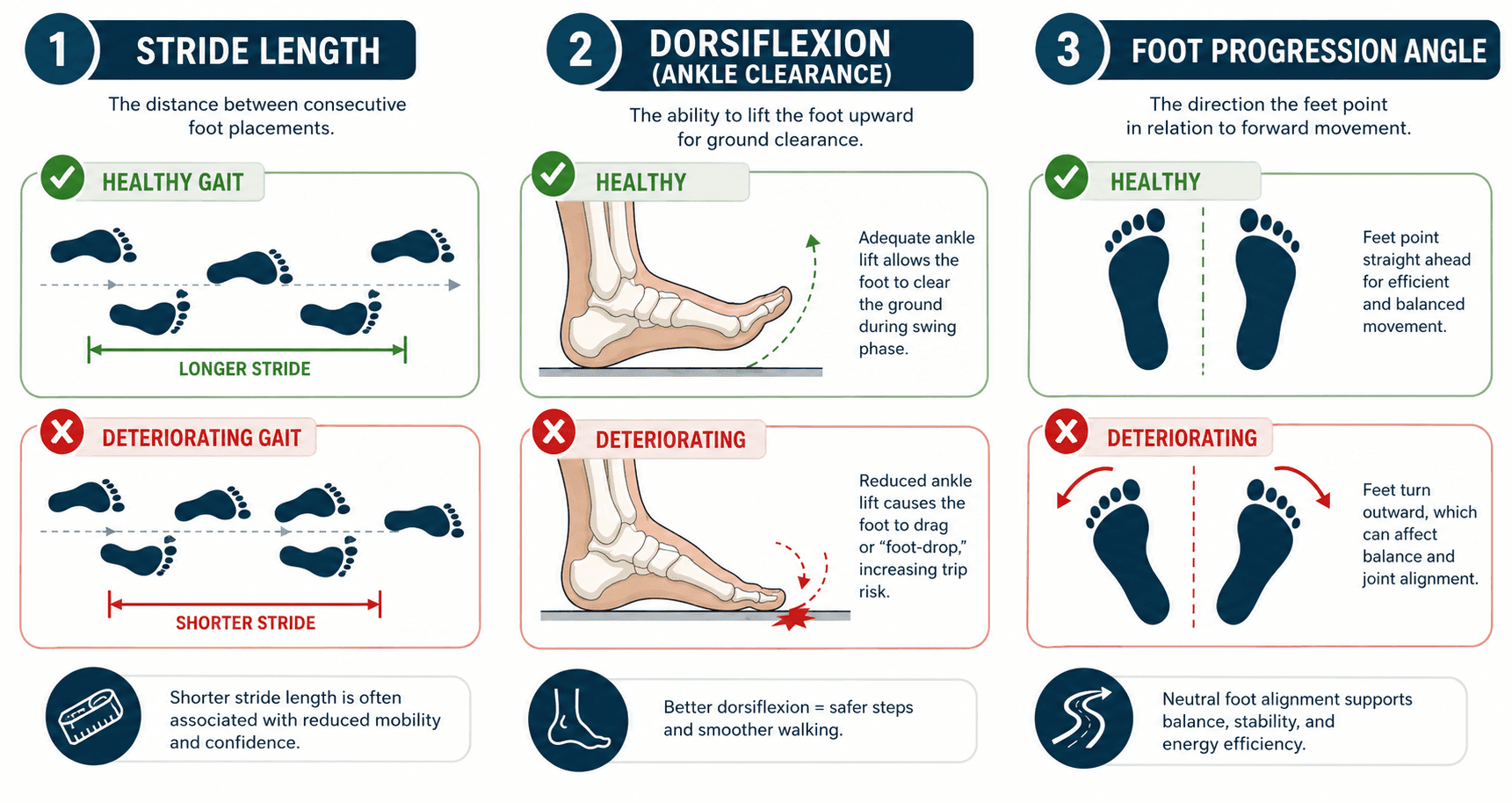
Doctors look for several specific warning signs in a patient's daily walking habits:
- Shorter steps as moving gets harder
- Uneven or unsteady stepping patterns that show balance issues
- Not lifting the foot high enough, which increases the chance of tripping
- Walking with toes pointing further outward to try and feel more stable
The Clinic vs. The Home
If these walking changes are so predictable, why are they missed? The problem is how we currently check for fall risks. When older adults visit the doctor, they are usually only watched while walking down a short hallway for a few minutes.
Medical studies show that quick checkups are not enough to accurately predict falls. A 10-minute visit only shows the patient at their best, not when they are tired—which is when falls usually happen.
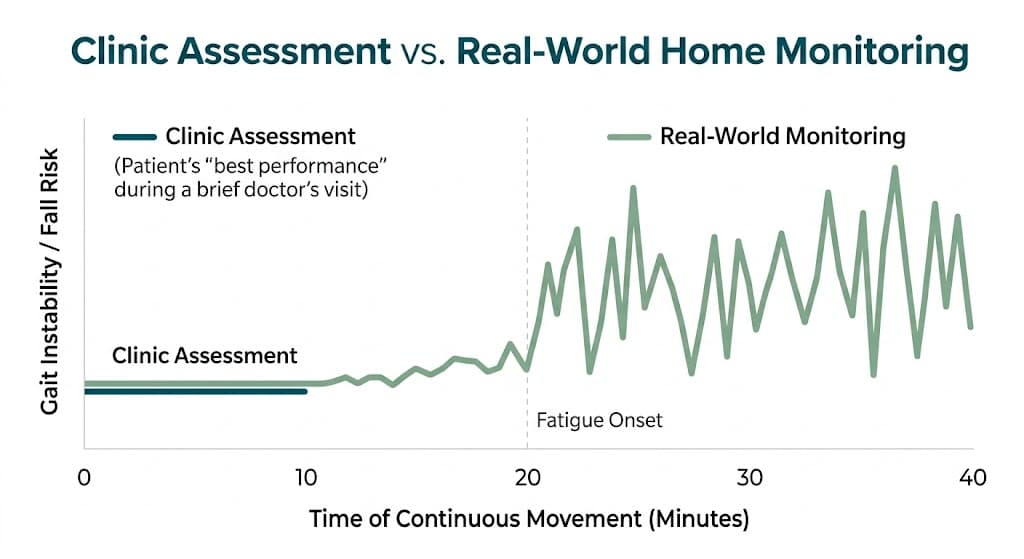
Patients naturally try harder when they know a doctor is watching. This "best behavior" hides the real-world tiredness and walking struggles that happen at home after 20 minutes of moving around.
The Six-Week Warning Window
Moving from quick doctor visits to daily home tracking is a game-changer for senior care. By using smart wearable technology, doctors can track a patient's true walking habits across thousands of everyday steps.
Most importantly, daily tracking can spot serious walking changes an average of 6–8 weeks before a doctor would notice them during a regular checkup.
dangerously highWeek 8
Each bar represents a few days of real-world walking data. The changes start small and grow steadily—showing up weeks before they would ever be noticed during a normal doctor visit.
This extra time is crucial. It gives families and doctors enough time to help—like adjusting a cane, starting physical therapy, or making the home safer—helping to stop the fall before it ever happens.
Protecting Independence Through Data
For seniors and their families, a fall is more than just a physical injury; it is a huge threat to living independently. Hip fractures, for example, carry a very high risk of severe complications for patients over 70.
By tracking walking habits daily, we can move away from waiting for emergencies to happen. Instead, we can use smart data to protect older adults. It is no longer about responding to a fall—it is about predicting and preventing it.